Alemanha e Países Baixos passaram a usar o X-Ray Scanner para caixas
Some countries have introduced or expanded the use of X-Ray scanning for boxes and parcels. For people who collect, ship or trade physical items related to gaming, such as stickers, capsules or other merchandise, this development can influence how items are prepared and transported. This article offers a general, evergreen perspective on what using X-Ray scanners for boxes means in practical terms and how individuals and businesses can respond.
The discussion below focuses on neutral explanations and practical guidance rather than on legal or technical specifics. It is intended to help readers understand broad implications and adopt sensible practices for handling physical items when scanning of parcels is more common.
How X-Ray scanning of boxes works in general terms
X-Ray scanners are imaging tools that let operators view the interior of a package without opening it. They reveal shapes, densities and sometimes contrasting materials, which helps with identification of prohibited or dangerous contents in a non-invasive way. The degree of detail varies with the type of equipment, but the basic idea is to enable inspection while preserving sealing and packaging.
When parcels are subject to X-Ray inspection, the image delivered to an operator provides clues about the contents. For collectors and shippers of small items, these clues will often be enough to flag whether a package should be opened for closer inspection or cleared. Understanding how scans represent items can inform packing choices and declarations for shipping.
Practical implications for collectors, traders and shippers
At the most basic level, more frequent scanning tends to increase the likelihood that a parcel will be reviewed visually by an inspector. For individuals sending or receiving game-related merchandise, this means thinking about packaging and documentation. Clear, accurate labeling and appropriate declarations can reduce unnecessary delays by helping inspectors quickly understand what is inside.
Packaging choices matter. Dense cushioning and multiple layers can obscure details on a scan, while compact, clearly arranged contents are easier to interpret. Using neutral outer packaging without excessive external markings can also make the inspection process more straightforward, because the X-Ray image will be the primary source of information for the inspector.
For sellers and traders, predictable packing standards help create reliable shipping experiences. Standardizing how items like sticker sheets or capsules are wrapped and documented can speed handling and reduce the chance of a parcel being held for inspection. It may also be useful to include an itemized packing slip inside so that if a package is opened, the contents are clearly recorded.
Considerations for privacy, security and trust
X-Ray inspection raises questions about privacy and data handling. While scans are typically used for safety and regulatory purposes, it is reasonable for senders and receivers to consider what imagery might be retained and who has access. Using minimal, necessary documentation and avoiding the inclusion of sensitive personal information in parcels can help mitigate privacy concerns.
Security of high-value or collectible items is another consideration. Insuring shipments, choosing reputable carriers and keeping records of serial numbers or identifying features are established practices that remain relevant when scanning becomes more common. These measures do not prevent inspection but help ensure recourse in case of loss or damage.
How this relates to selecting stickers and capsules
Collectors who focus on stickers and capsules will find that the physical attributes of items affect how they appear on a scan. Flat, uniform objects and compact items are easier to identify than loose or irregularly packed contents. Selecting storage and packaging materials that protect items while maintaining clarity on a scan is a practical way to balance preservation with efficient handling.
When trading or sending items internationally, familiarizing oneself with carrier requirements and using consistent packaging can reduce friction. Clear photographs and documentation kept by the sender help resolve disputes and offer transparency to the recipient if a package is inspected.
Conclusion
The introduction or expansion of X-Ray scanning for boxes in some jurisdictions encourages a pragmatic approach to packing, documentation and security. For collectors, sellers and shippers of game-related physical items, the key points are clear packing, accurate documentation, and sensible protective measures. These practices facilitate inspection processes and support the safe transport of collectibles without relying on specific technical or legal claims.
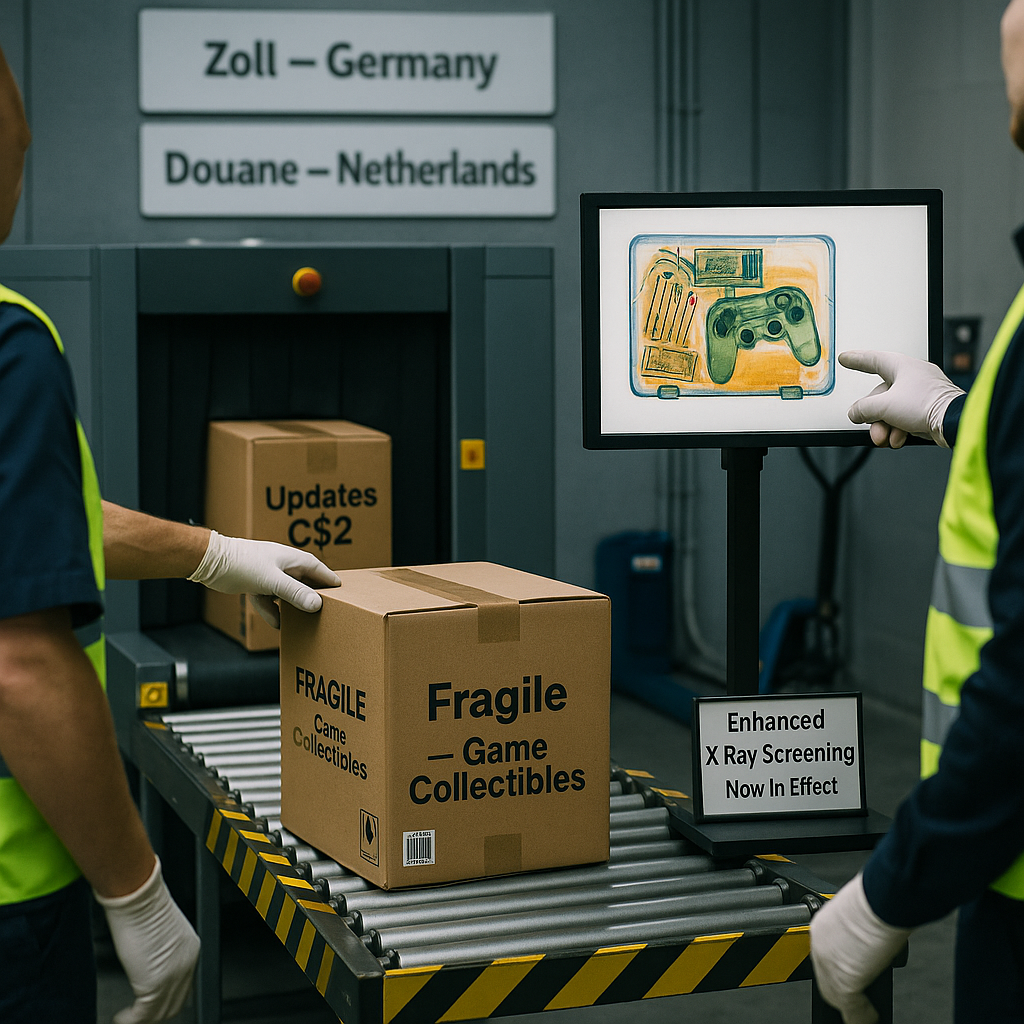
Adapting to more frequent parcel inspections involves small changes to routine rather than wholesale shifts in activity. Thoughtful packaging and keeping good records are evergreen steps that help protect items and maintain smooth transactions in an environment where non-invasive inspection by scanning is more common.