Rotterdam foi disputado no patch antigo apesar do update grande de março
Introduction: When a major update rolls out, it is natural to expect immediate shifts in competitive map choices and playstyles. Yet, some maps can remain contested on the older patch despite a sizable update. Rotterdam is an example that highlights how map design, player familiarity, and broader meta dynamics can delay visible change. This article explores the underlying reasons for such resilience, offering practical perspectives for players, analysts, and community members.
Main factors: The decision to keep contesting a map on an older patch often reflects a combination of practical and strategic considerations. Teams and players prioritize consistency when preparing for matches. A big update can alter weapon balances, movement, or map geometry in ways that require time to integrate; until that adaptation is complete, many will favor the known environment.
Section 1: Map design and strategic fit. Rotterdam’s layout and flow may align well with certain playstyles that teams have practiced extensively. Map design elements such as chokepoints, sightlines, and rotation paths shape how strategies develop. If those elements remain serviceable on the old patch, teams can rely on established tactics rather than experimenting under new conditions. This is particularly true for maps where set pieces and utility usage have a high impact and where small timing differences matter more than theoretical balance changes.
In addition, the psychological comfort of a familiar map should not be underestimated. Teams build deep preparation regimes for specific maps, drilling executes, retakes, and timings. When an update introduces uncertainty, the predictable performance on the old patch can seem preferable for critical matches, especially in environments where error margins are small.
Section 2: Meta inertia and preparation cycles. Competitive meta does not shift instantly. Players and teams require time to explore how updates affect commonly used strategies. Practice infrastructure, VOD review, and scrimmage schedules are all tuned to existing patches. Even a large update released in March may take weeks of iteration before new optimal approaches emerge and become widespread.
Many organizations also balance short-term results with long-term development. For a single match or series, relying on the old patch can be a calculated choice to maximize immediate performance. Over time, as teams collect experience and incorporate changes into training plans, the community as a whole migrates toward the updated environment. Until that migration is deep enough, contested maps can persist on the older patch.
Section 3: Practical considerations and technical constraints. Beyond strategy and training, logistical and technical factors influence patch adoption. Tournament operators, server setups, and client versioning practices create a landscape where not every match moves to the newest build right away. When organizers and teams have to coordinate changes, some events and matches continue under prior conditions to ensure stability and predictability.
Additionally, map authors and developers may continue refining a map or its implementation after a major update. If there is ongoing iteration or outstanding issues, teams may prefer to wait rather than adapt to a version that could receive further tweaks. Such cautious approaches are common in competitive environments that value clarity and fairness.
Implications for players and observers. For players looking to stay competitive, understanding why a map remains on an older patch helps shape preparation choices. It can be pragmatic to maintain competence on both the current stable patch and the new update, splitting practice time to hedge against different scenarios. Observers and analysts can use persistence of older-patch play as a signal about how disruptive an update truly is, and whether the community needs more time to adapt.
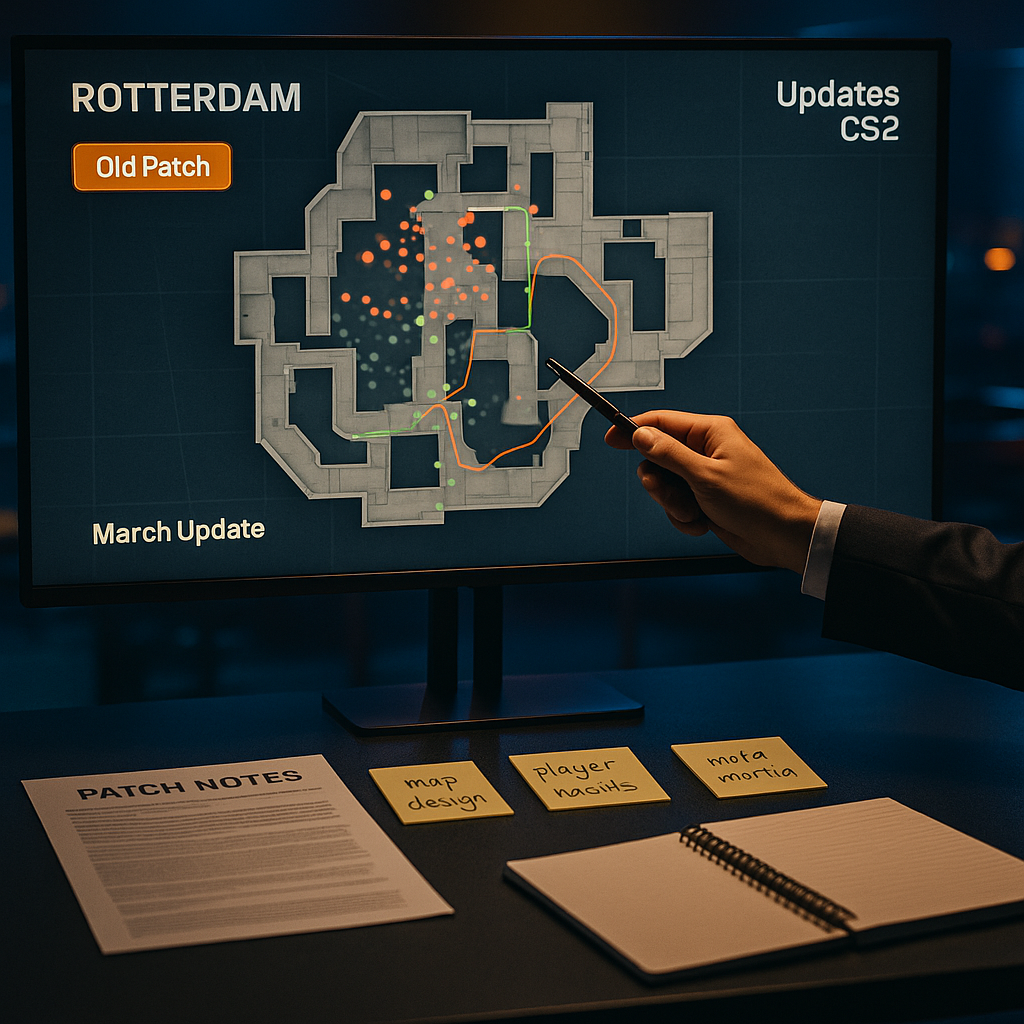
Conclusion: Rotterdam being contested on the old patch despite a major March update illustrates a broader pattern in competitive games. Map resilience arises from a mix of design fit, meta inertia, preparation practices, and logistical constraints. Rather than indicating a failure of updates, such situations often reflect prudent choices by teams and organizers who prioritize consistency and performance while the community digests larger changes. Over time, adaptation tends to occur as practice, analysis, and infrastructure align with the new patch, but the transitional period can reveal much about competitive priorities and the role of stable preparation.